Summary:
You’ve got a renovation coming up — maybe a kitchen gut, a bathroom overhaul, or something bigger — and at some point it hits you: where is all this debris going? Most homeowners don’t think about waste management until they’re already mid-demo, which is exactly when it gets complicated. In Nassau County, that means figuring out the right dumpster size, whether you need a permit, and how to get a container delivered before your contractor shows up ready to start. This guide walks you through all of it so you can plan smart, avoid the common mistakes, and keep your project moving on schedule.
Choosing the Right Dumpster Size for Your Nassau County Renovation
The most common mistake homeowners make is guessing on size. Rent too small and you’re paying for a second delivery mid-project — which typically runs $300 to $400 more than simply upsizing from the start. Rent too large and you’ve spent money on capacity you never used. Neither outcome is great, but one is clearly worse.
The good news is that sizing isn’t complicated once you know what each container is actually built for. A 10-yard dumpster handles small jobs — think a single bathroom teardown, a roofing strip on a garage, or a concrete removal. A 20-yard is the workhorse for most residential renovations: kitchen remodels, roof replacements on a full house, or a larger bathroom with tile and fixture removal. If you’re doing a whole-house renovation or gutting multiple rooms at once, you’re likely looking at a 30-yard or larger.
What Size Dumpster Do You Need for a Kitchen or Bathroom Remodel?
Kitchen renovations generate more debris than most homeowners expect. Cabinets, countertops, flooring, drywall, old appliances — it adds up fast. For a standard kitchen remodel in a Nassau County home, a 15- to 20-yard dumpster is usually the right call. If you’re also pulling up subfloor or doing any structural work, lean toward the larger end.
Bathroom remodels are more forgiving in terms of volume, but the materials are dense. Tile, cement board, cast iron fixtures, and old vanities are heavy relative to their size, and most dumpsters have weight limits that matter as much as cubic yardage. A 10-yard container works for a single bathroom, but if you’re doing two bathrooms simultaneously — which is common in older Nassau County homes getting a full update — a 15-yard gives you the room to work without worrying about hitting the weight cap.
One thing worth knowing: the housing stock across Nassau County — Levittown, Massapequa, Merrick, Bellmore — was built predominantly in the 1950s and 1960s. Those homes are solid, but they weren’t built with modern materials. When you tear into them, you often find surprises: extra layers of flooring, old plaster walls, or outdated insulation that all needs to go. Building in a small buffer on your container size is almost always worth it.
The real cost of undersizing isn’t just the second delivery fee. It’s the delay. If your contractor is ready to keep moving and your dumpster is full with nowhere to put debris, work stops. On Long Island in the summer, when contractors are booked tight and every day counts, that kind of delay can push your project back by more than you’d think.
How to Handle Construction Waste Dumpster Weight Limits Without Getting Surprised
Weight limits are where a lot of homeowners get caught off guard. Every rental comes with a maximum tonnage, and going over it triggers overage fees that can add hundreds of dollars to your final bill — sometimes without much warning. The issue is that renovation debris, especially from older homes, tends to be heavier per cubic foot than people expect.
Concrete, ceramic tile, brick, and cast iron are the main culprits. A dumpster that looks half-empty by volume can be at or near its weight limit if it’s loaded with dense materials. If your project involves significant concrete removal — a patio, a basement floor, an old chimney — it’s worth having that conversation with your rental company before you book, not after.
The fix is straightforward: be specific about what you’re throwing in when you call. We ask the right questions and help you choose a container that fits both the volume and the weight of your debris. If you’re mixing light materials like drywall and lumber with heavy ones like tile and concrete, that changes the recommendation.
It’s also worth asking upfront what the overage fee structure looks like. Some companies charge a flat rate per ton over the limit; others have tiered pricing. Either way, knowing the number before you start loading is far better than finding out when the final invoice arrives. Transparent pricing isn’t just a nice-to-have — it’s how you stay on budget during a renovation that already has plenty of moving parts.
One more thing: prohibited items. Paint, solvents, certain adhesives, asbestos-containing materials, and most electronics can’t go in a standard renovation dumpster. This isn’t a technicality — it’s a disposal and safety requirement. If you’re renovating a home built before 1980 in Nassau County, it’s worth asking about how to handle materials that might contain asbestos or lead before the demo starts.
Renovation Debris Removal in Nassau County: Permits, Timing, and What Actually Slows Projects Down
Getting the right size container is only part of the equation. The other part is making sure you can actually use it where you need it, when you need it — without running into permit issues or scheduling gaps that stall your project.
Nassau County has specific rules around dumpster placement, and they vary more than most people realize. Understanding them before your delivery date isn’t just about avoiding fines — it’s about making sure your renovation doesn’t lose momentum at the worst possible moment.
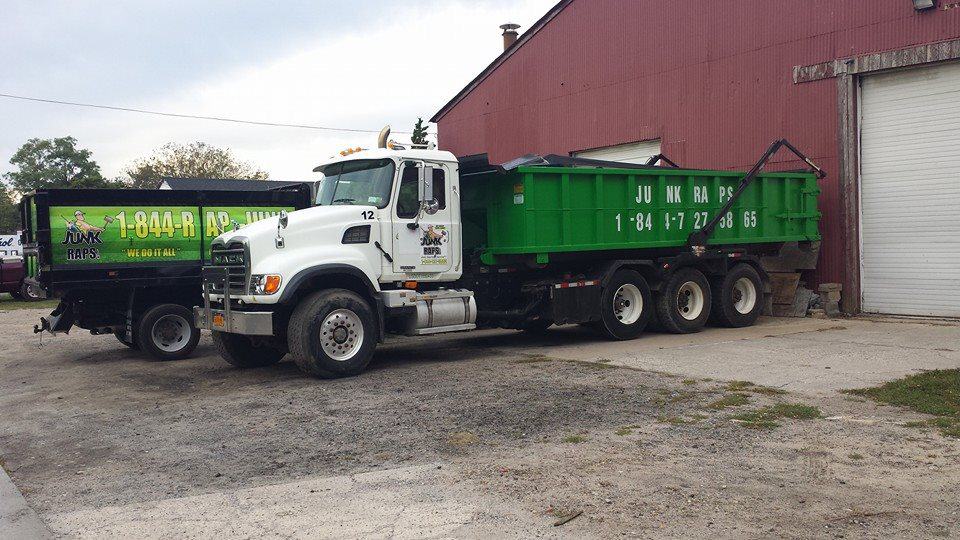
Nassau County Dumpster Permit Rules: What Homeowners in Hempstead, Garden City, and Beyond Need to Know
Here’s the part that surprises most people: if your dumpster sits entirely on your private property — your driveway, for example — you typically don’t need a permit in Nassau County. The permit requirement kicks in when the container goes on public property, like the street or a sidewalk strip. That’s where placement becomes a regulatory matter, not just a logistics one.
The Town of Hempstead, which covers a significant portion of Nassau County including Levittown, Valley Stream, Rockville Centre, and Garden City, enforces these rules actively. Fines for unpermitted street placement in Hempstead can range from $20 on the low end to over $1,000 for repeat or egregious violations. That’s not a hypothetical risk — it’s a real one, and it’s the kind of cost that turns a well-planned renovation into an expensive headache.
Street placements in Nassau County are also typically limited to five days. If your project runs longer than that — and most do — you’ll need to plan around that window or coordinate a permit extension through the appropriate town department. Nassau County’s 60-plus incorporated villages each operate with some degree of independent authority, which means the rules in Great Neck aren’t identical to those in Oyster Bay or Mineola.
The practical takeaway: talk to us before the dumpster is delivered, not after. We know Nassau County well and can tell you exactly what applies to your specific address, handle the permit application if one is needed, and position the container correctly from the start. That’s not a small thing — it’s the kind of local knowledge that separates a smooth project from one that gets derailed before the first wall comes down.
Avoiding Summer Construction Project Delays on Long Island: Book Early or Choose Wisely
Summer is when most Nassau County homeowners launch their renovation projects. School’s out, the weather cooperates, and there’s a cultural rhythm to Long Island home improvement that peaks hard between May and September. The problem is that every other homeowner — and every contractor they’ve hired — is thinking the same thing at the same time.
Dumpster availability tightens significantly during peak season. Companies that don’t prioritize scheduling flexibility will tell you the earliest available delivery is a week or two out. If your contractor is ready to start demo on Monday and your dumpster doesn’t arrive until Thursday, you’re paying for labor that can’t move forward. That delay compounds quickly when contractors are juggling multiple jobs and can’t simply pause and come back the next day without consequence.
There are two ways to handle this. The first is to book early — ideally two to three weeks before your project start date during summer months. The second is to work with a company that has genuine same-day delivery capability and flexible scheduling, so that even if your timeline shifts, you’re not scrambling.
This matters especially for phased renovations, which are common in Nassau County’s older housing stock. You might demo the kitchen first, take a week for rough work, then move to the bathroom. Each phase generates debris at a different time. We can adjust pickup and drop-off schedules without making it a production, because your project timeline will almost certainly shift at least once.
The dumpster rental versus full-service junk removal question also comes up here. For long renovation projects with sustained debris output, a dumpster rental makes sense — it’s there when you need it, and you load it on your own schedule. For smaller, one-time loads or a final cleanout at the end of a project, full-service junk removal is often faster and more cost-effective. You don’t pay for days of rental you don’t use, and you don’t have to lift anything yourself. We offer both options so you can make the right call for each phase of your project rather than forcing everything into one approach.
Ready to Plan Your Nassau County Home Renovation Dumpster Rental?
The projects that go smoothly are the ones where the logistics were figured out before the first wall came down. Right-size your container, understand where it can legally go, and have a plan for timing that accounts for contractor schedules and peak-season availability. Those three things eliminate the majority of problems homeowners run into.
If you’re still not sure whether a dumpster rental or full-service junk removal makes more sense for your specific project, that’s a question worth asking before you commit to either. The answer depends on your timeline, your debris volume, and how much of the work you want to handle yourself.
We serve Nassau County and Suffolk County with same-day delivery, transparent flat-rate pricing, and the flexibility to adjust your schedule as the project evolves. Reach out to talk through your project — it’s a quick conversation that can save you real time and money before your renovation gets underway.