Summary:
Most people searching for a roll off dumpster rental don’t want a lesson in waste management. They have a project, a deadline, and a driveway they’re hoping doesn’t get damaged. What they actually want to know is: what size do I need, what’s it going to cost, and can someone get it here fast?
Those are fair questions, and this guide answers all of them. We’ll also cover the permit rules specific to Nassau County, what drives prices up or down, and how to tell a straightforward quote from one that’ll surprise you at the end. By the time you’re done reading, you’ll know exactly what to ask for.
How Roll Off Dumpster Rental Works in Nassau County
A roll off dumpster — sometimes called a debris box or roll off container — is an open-top metal bin that gets dropped at your location, filled on your schedule, and picked up when you’re ready. The process is straightforward: you choose a size, pick a delivery date, load it up, and call when you’re done. No hauling to the dump yourself, no multiple trips, no guessing whether your curbside pickup will take it.
In Nassau County, the logistics matter more than in some other markets. Streets in communities like Oceanside, Wantagh, and Bellmore are narrow, driveways are tight, and neighbors are close. We know these streets — and how to maneuver a loaded truck through them — which makes the whole thing a lot less stressful than working with a provider dispatching drivers who’ve never been east of Queens.
What Size Roll Off Dumpster Do You Actually Need?
Sizing is where most people either overthink it or guess wrong. The most common residential sizes are 10-yard, 15-yard, and 20-yard containers. For larger construction or full-property cleanouts, 30-yard and 40-yard units come into play. If thinking in cubic yards feels abstract, try this instead: a 10-yard dumpster holds roughly the equivalent of three full pickup truck loads. A 20-yard holds about six. That tends to make the decision a lot more intuitive.
For a standard bathroom renovation or single-room cleanout in a home — the kind of project common in Nassau County’s aging post-war housing stock — a 10-yard container usually does the job. Kitchens, multiple rooms, or a full basement cleanout typically call for a 15 or 20-yard unit. Full gut renovations, roofing tear-offs, or multi-room remodels on the kind of expanded Cape Cods and split-levels you find throughout Massapequa and East Meadow? You’re probably looking at a 20 or 30-yard.
The real risk isn’t ordering too big — it’s ordering too small and needing a second container mid-project, which effectively doubles your cost. When in doubt, size up slightly. The price difference between a 15 and 20-yard unit is usually modest compared to the cost and delay of a second delivery. If you’re unsure, just call and describe the project. A few questions from someone who’s handled hundreds of Nassau County jobs will get you to the right answer faster than any size chart.
One thing worth knowing: heavier materials like concrete, brick, and tile behave differently than general household debris. A small pile of concrete can hit a weight limit fast. If your project involves any demolition work, that changes the sizing and pricing conversation — which brings us to the next section.
Demolition Dumpster Rental Prices: What Changes When the Work Gets Heavy
Demolition projects — tearing out a concrete patio, removing a deck, knocking down interior walls — generate a different kind of debris than a standard cleanout. The material is denser, heavier, and fills a container’s weight limit long before it fills its volume. That distinction matters because most dumpster rentals are priced with a weight allowance built in. Go over that limit, and you’re paying overage charges, typically in the $75–$105 per ton range in the Nassau County market.
For demolition dumpster rental, the smarter approach is to either order a smaller container specifically for the heavy material — keeping concrete, brick, and tile separate from lighter construction debris — or to discuss the project upfront so the weight allowance is set appropriately. Trying to mix a full concrete demolition with general renovation waste in a single container is where people get hit with unexpected charges.
If you’re doing any kind of structural demo in Nassau County — whether that’s a garage slab in Syosset, a basement floor in Plainview, or a full patio removal in Garden City — be upfront about what’s coming out. That one conversation upfront saves you from a bill at the end that doesn’t match the quote you agreed to.
Cheap Dumpster Rental Prices in Nassau County: What You're Actually Comparing
Pricing in the Nassau County dumpster rental market runs roughly $450–$550 for a 10-yard container, $800–$850 for a 20-yard, and $900–$950 for a 30-yard — with those figures typically covering two to five tons of debris depending on the size. Long Island pricing reflects the higher disposal costs and regulatory complexity that come with operating near New York City.
What those numbers don’t always tell you is what’s included. Some providers advertise a low delivery rate and bill separately for pickup, landfill disposal, and fuel surcharges after the fact. An all-inclusive quote — one number that covers delivery, pickup, disposal, and any applicable fees — is what you want to ask for. If a company is vague about the total cost upfront, that’s worth paying attention to.
Debris Box Rental Cost: Why the Name Changes but the Pricing Factors Don't
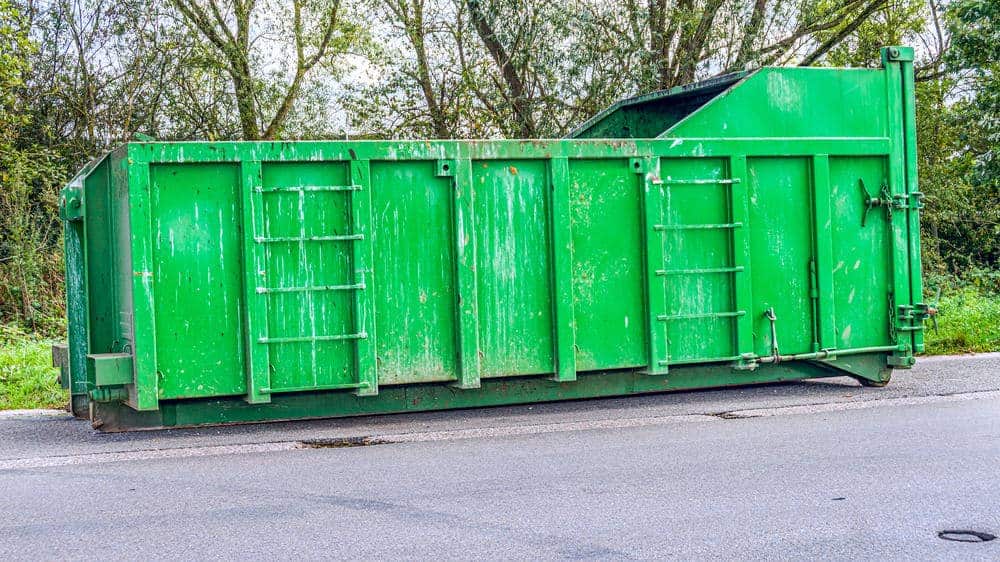
“Debris box rental” is just another name for a roll off container — the terms are used interchangeably depending on the region and the contractor you’re talking to. If you’ve seen that phrase in a quote or search result and wondered whether it’s a different product, it isn’t. Same open-top metal container, same delivery-and-pickup model, same pricing structure.
What drives debris box rental cost — regardless of what you call it — comes down to a handful of consistent factors. Container size is the most obvious one. But weight is equally important, and it’s where a lot of people get caught off guard. The included weight allowance in a standard rental is there to cover typical residential debris. If you’re loading roofing shingles, tile flooring, or any kind of masonry, you’re dealing with materials that are significantly heavier per cubic foot than furniture, drywall, or general household junk.
Rental duration also affects cost. Most standard rentals cover a set number of days — often seven to fourteen. Holding a container beyond that window typically adds $25–$50 per day in the Nassau County market, so if your project timeline is uncertain, it’s worth asking about extension options before you book rather than after. Flexible scheduling — the ability to call and adjust your pickup date without penalty — is something we offer because we know renovations rarely stick to the original timeline.
Finally, location plays a role. Placing a dumpster on a public street in Nassau County requires a permit. Keeping it in your driveway, entirely within your property line, generally doesn’t — but the moment any part of the container crosses onto the sidewalk or street, you’re in permit territory. The Town of Hempstead, which covers a large portion of Nassau County including communities like Levittown, Merrick, and Uniondale, has a specific local ordinance (Chapter 176) that limits roll off container placements on public property to 14 days before a renewal is required. Fines for unpermitted placements can range from $20 to over $1,000 depending on the municipality and the circumstances. Knowing this upfront — and working with a provider who can walk you through what applies to your specific address — is part of what separates a smooth rental experience from a complicated one.
Rent Trash Dumpster Prices vs. Full Junk Removal: Which One Makes Sense for Your Project?
This is a question worth answering before you book anything. A roll off dumpster rental is a DIY solution — the container gets dropped at your location, you load it on your timeline, and it gets picked up when you’re done. Full-service junk removal means a crew comes to your property, loads everything themselves, and hauls it away the same day. Two different services, two different price points, and two different situations where each one makes more sense than the other.
If you’re doing an active renovation — tearing out a kitchen, gutting a bathroom, clearing a basement over the course of a week — a dumpster rental is usually the more cost-effective approach. You control the pace, you’re not paying for labor you don’t need, and you have a container on-site whenever you generate debris. For a project that spans several days or more, rent trash dumpster prices will typically come in lower than the equivalent in full-service removal.
Full-service junk removal makes more sense when the work is already done and you just need it gone fast, when items are large or heavy enough that you’d rather not handle them yourself, or when you’re dealing with a mix of furniture, appliances, and miscellaneous items that don’t fit neatly into a renovation debris category. Estate cleanouts in Nassau County often fall into this camp — the house is full, the timeline is tight, and the last thing anyone wants to do is spend a weekend loading a dumpster.
We offer both services, which means you’re not locked into one answer at the start. If a project shifts — a cleanout turns into a renovation, or a renovation generates more debris than expected — having access to both under one roof means you’re not scrambling to find a second provider mid-project. That flexibility is worth more than it might sound when you’re already knee-deep in a job.
Ready to Book a Roll Off Dumpster Rental in Nassau County?
The short version: know your project size, ask for an all-inclusive quote, understand your permit situation if the container is going near the street, and don’t let a low advertised price distract you from the total cost. Those four things will put you ahead of most people who call around without doing any homework.
Nassau County has its own rules, its own streets, and its own pace. We know the area — not routing calls through a national call center — which makes a real difference when something comes up mid-project.
If you’re ready to get a number, or just want to talk through what size makes sense for your job, reach out to us. Straightforward pricing, same-day delivery available, and a team that’s been handling Nassau County projects long enough to know what you’re dealing with before you finish describing it.