Summary:
A nor’easter tears through and suddenly there’s a 40-foot oak across your driveway. Or a line of storms rolls up the South Shore and your backyard looks like a lumber yard. You call the town, get a recorded message, and have no idea when anyone’s coming.
That’s the reality for a lot of Nassau County homeowners after a major storm. The question isn’t whether the debris will get cleared — it’s how long you’re willing to wait, and what that wait is actually costing you.
This page breaks down the honest comparison between municipal pickup and private storm debris removal, so you can make the right call for your situation.
Municipal vs. Private Storm Debris Removal: How the Response Times Actually Compare in Nassau County
Nassau County is made up of more than 60 municipalities — the Town of Hempstead, North Hempstead, Oyster Bay, the City of Long Beach, and dozens of villages and unincorporated communities all operating their own DPW schedules. After a significant storm, each one is managing its own backlog. Nassau County’s own debris removal scope of work confirms that municipal contractors typically conduct two to three scheduled passes at one-week intervals — meaning the first truck may not reach your street for two to three weeks, and that’s assuming your debris qualifies for pickup at all.
The bigger issue is what municipal services actually cover. FEMA and local DPW operations focus on public rights-of-way — roads, sidewalks, and curbside pickup. Debris that fell entirely within your property line is your responsibility, full stop. A tree that came down in your backyard, branches piled against your fence, debris blocking your driveway — none of that is on the town’s list. You’re waiting for something that was never coming.
Tree Debris Removal After a Nassau County Storm: What the Town Handles vs. What Falls on You
Tree debris is by far the most common post-storm cleanup need across Nassau County. Towns like Garden City, Rockville Centre, Manhasset, and Port Washington are known for their mature, tree-lined streets — and those same beautiful trees become serious hazards when a nor’easter pushes through with 50-mph gusts. A single storm can bring down dozens of limbs and whole trees across a single block.
Here’s the part that catches a lot of homeowners off guard: even if a tree from your neighbor’s yard fell into yours, the debris that landed on your property is generally your financial responsibility to remove. The town isn’t going to come onto your property to haul it out. And if the tree is still standing but visibly damaged and leaning toward your house, that’s an arborist’s call first — cutting it down safely is specialized work. What comes after the cutting, all the limbs, branches, and trunk sections that need to be hauled away, is where a debris removal crew comes in.
After Hurricane Sandy, the Army Corps of Engineers was still calling debris collection efforts in Nassau and Suffolk counties “in their infant stages” more than two weeks after landfall. For a nor’easter — which rarely triggers a federal declaration — municipal resources may not be mobilized at all. That means the debris in your yard is entirely your problem, on your timeline.
The practical difference between waiting and hiring privately is measured in days versus weeks. We can show up same day, load everything, and haul it to a licensed disposal facility. That’s not a sales pitch — it’s just the math on how the two systems work.
Hurricane Cleanup on Long Island: Why the South Shore Can't Afford to Wait
If you live in Long Beach, Freeport, Oceanside, Island Park, Massapequa, or anywhere along Nassau County’s South Shore, you already know what storm damage looks like up close. Sandy put that into sharp focus for an entire generation of Long Island homeowners — not just the flooding, but the weeks of waiting that came after. Debris grants made up more than 75% of all FEMA assistance authorized for Long Island in Sandy’s aftermath, which tells you just how much material was left behind and how long it took to deal with.
The cost of waiting isn’t just inconvenience. Storm debris left sitting on a property creates real, compounding problems. A downed tree leaning against a structure puts ongoing stress on whatever it’s touching. Debris blocking drainage leads to water pooling in places it shouldn’t. Scattered material attracts pests. And if you have a contractor coming to assess roof damage or make repairs, they often can’t even get their truck to your property until the debris is cleared. The debris removal isn’t just cleanup — it’s the prerequisite to everything else.
There’s also the insurance angle, which is worth understanding before you do anything. Most homeowner’s policies have some provision for storm debris removal, but coverage varies widely. What matters for your claim is documentation: photos of the debris before removal, a clear invoice from a licensed company showing what was removed and what it cost, and a record of when the work was done. Insurance adjusters want a paper trail. A professional, itemized receipt from a licensed and insured company is exactly what supports a claim — a cash payment to an unlicensed operator with no paperwork is not. Beyond the claim itself, using an unlicensed hauler in New York carries its own risk. NYSDEC regulations require debris to be transported to authorized disposal facilities. If an unlicensed crew dumps your debris illegally, the liability can trace back to you.
Emergency Cleanup Services in Nassau County: What Happens When You Call Us
When you call us after a storm, the process is straightforward. We’ll ask you what you’re dealing with — tree debris, mixed yard waste, construction materials, or some combination — give you a transparent quote with no hidden fees, and confirm availability. Same-day service is available, and if items take up less space in the truck than expected, the price comes down to reflect that. No surprises.
We serve Nassau and Suffolk County and have been doing this across Long Island for years. We know the roads, we know the towns, and we know what post-storm cleanup actually looks like in communities like Baldwin, Merrick, Valley Stream, and Hicksville. That local familiarity matters when you need someone who can get there quickly and work efficiently once they arrive.

Dumpster Rental vs. Full-Service Junk Removal for Storm Debris: Which One Makes Sense for Your Situation
One of the more practical questions after a storm is whether to rent a dumpster and load it yourself or have a crew come handle everything. The honest answer is that it depends on your situation — and we offer both, which means we’re not steering you toward the more expensive option.
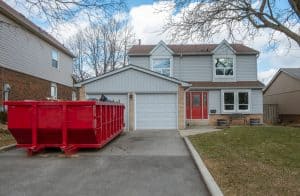
If the damage is spread across your property and you want to work through it over a few days — sorting what’s salvageable, breaking down debris in stages — a roll-off dumpster rental gives you that flexibility. You set the pace, load what you want, and call for pickup when you’re done. It’s a good fit for homeowners who want control over the process and have the time to manage it.
If you’re dealing with a large volume of heavy debris, you’re not physically up for the loading, or you simply need it gone today so you can get to everything else — full-service removal is the better call. Our crew shows up, handles the lifting and loading, and hauls everything away. Customers consistently describe the experience as fast and stress-free, which is exactly what you need when you’re already managing everything else that comes with post-storm recovery.
The key point is that you don’t have to figure out which option fits before you call. We’ll talk through what you’re dealing with and give you an honest recommendation. Pricing is upfront either way, and it often comes in below what you’d expect — and below what competitors in Nassau County typically charge.
Insurance and Documentation for Storm Debris Cleanup: What Nassau County Homeowners Should Know Before Work Starts
A common instinct after a storm is to wait for your insurance company to tell you what to do before hiring anyone. That instinct is understandable, but it can work against you. Most adjusters expect homeowners to take reasonable steps to prevent further damage — and leaving a downed tree against your house or debris blocking your drainage while you wait for a callback isn’t considered “waiting responsibly.” It’s just waiting.
The smarter move is to document everything before any removal begins. Walk the property and photograph all debris from multiple angles. Note what fell, where it landed, and whether it caused any visible damage to structures, fencing, or landscaping. If there’s any chance that older materials — roofing, siding, insulation — were disturbed by the storm, be aware that NYSDEC specifically flags asbestos-containing materials as a risk in storm events, particularly in older Long Island homes. Nassau County has a significant inventory of post-war housing stock from the 1940s and 1950s where this is a legitimate concern. A licensed, insured crew is trained to recognize and handle these situations appropriately.
Once documentation is done, move forward with removal. Keep every receipt. A clear, itemized invoice from a licensed company — showing what was removed, the date, and the total cost — is the document your insurance adjuster needs to process a debris removal claim. Nassau County homeowners who went through Sandy know this from experience: the paper trail matters. Policies vary, but having professional documentation gives you the strongest possible position when you file.
One more thing worth knowing: FEMA does not reimburse property owners for removing debris from their own property. Federal assistance covers debris on public land. What’s on your property is on you — which is exactly why having a fast, affordable private option matters.
Choosing the Right Storm Debris Removal Option in Nassau County, NY
The short version: municipal pickup is slow, limited to public areas, and operates on a schedule that has nothing to do with your timeline. Private removal is faster, covers your actual property, and — when you choose a licensed, insured company with transparent pricing — gives you the documentation you need to support an insurance claim.
For most Nassau County homeowners dealing with post-storm debris, the real question isn’t whether to hire private help. It’s how quickly you call.
If you’re dealing with storm debris right now and need it gone fast, we’re available for same-day service across Nassau County. Reach out for a straightforward quote — no pressure, no hidden fees, just a clear answer on what it costs and when we can be there.